Universities and Startups Without Borders: The ZEEUS Project Connects Europe and Africa
What if universities were not just places where knowledge is passed on, but also places where concrete solutions to global challenges are created? This is exactly the direction taken by the international initiative ZEEUS, which connects academia with entrepreneurship and sustainability.
Universities as Drivers of Change
The international ZEEUS project has an ambitious goal: to transform universities into active players in innovation and entrepreneurship. Sustainability plays a key role here—an approach that emphasizes long-term value and seeks not only to solve problems but ideally to prevent them. “Sustainability should no longer be a standalone topic, but a natural part of how students, researchers, and aspiring entrepreneurs think when developing projects,” says project leader Lukáš Válek from the Faculty of Business Administration.
As part of this approach, the ZEEUS project is also developing an educational toolkit focused on social entrepreneurship. It is designed to be practical and continuously improved by its users. “The goal is not to create another document, but a tool that will actually be used in practice,” adds Lukáš Válek.
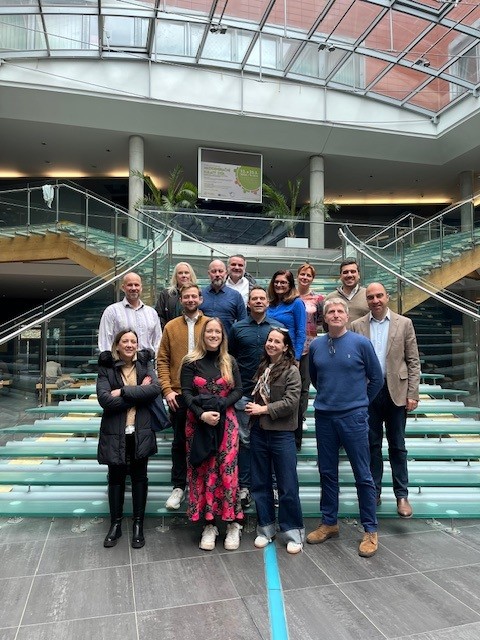
From Online to Reality: ZEEUS Partners Meet at UEP
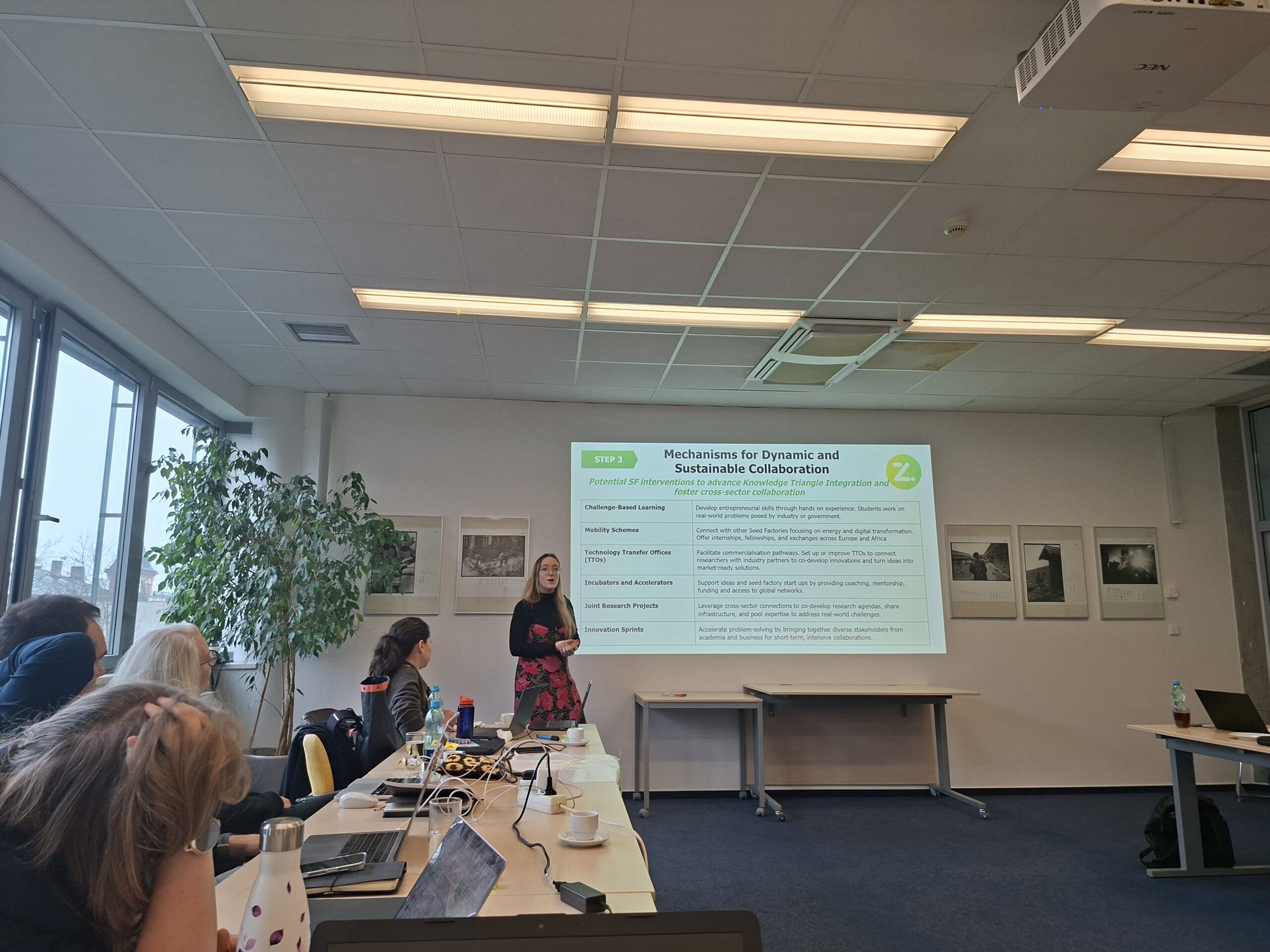
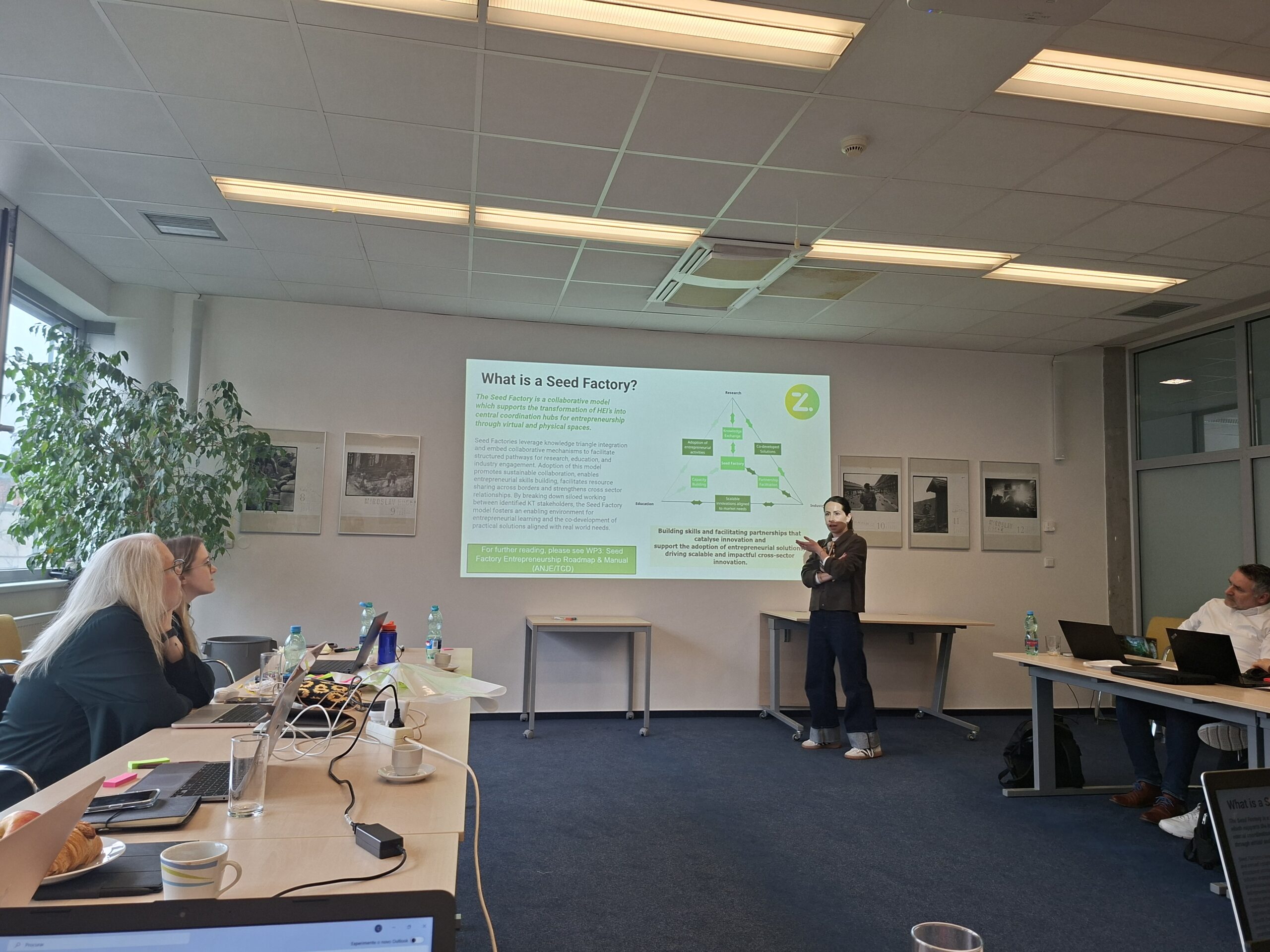
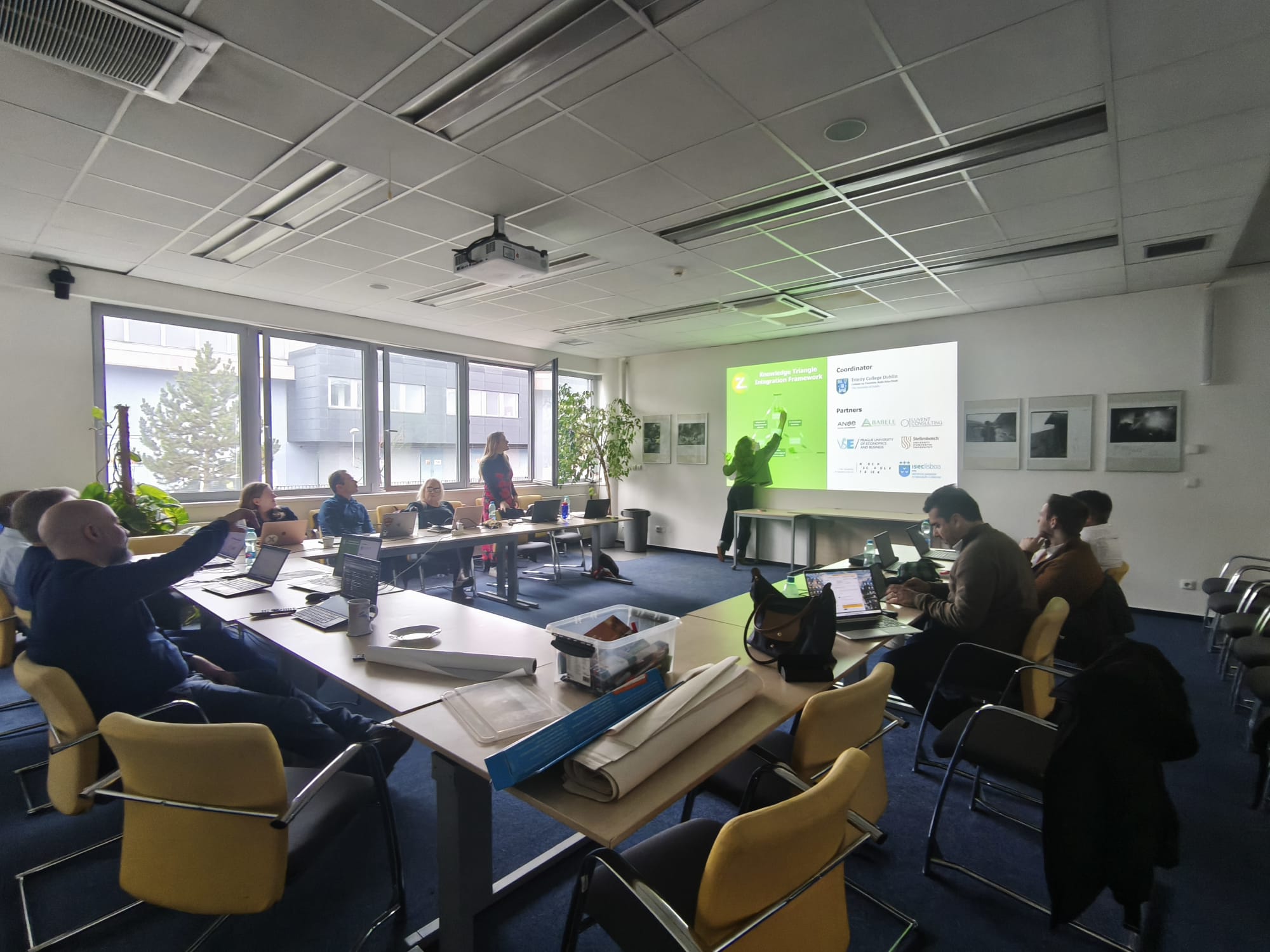
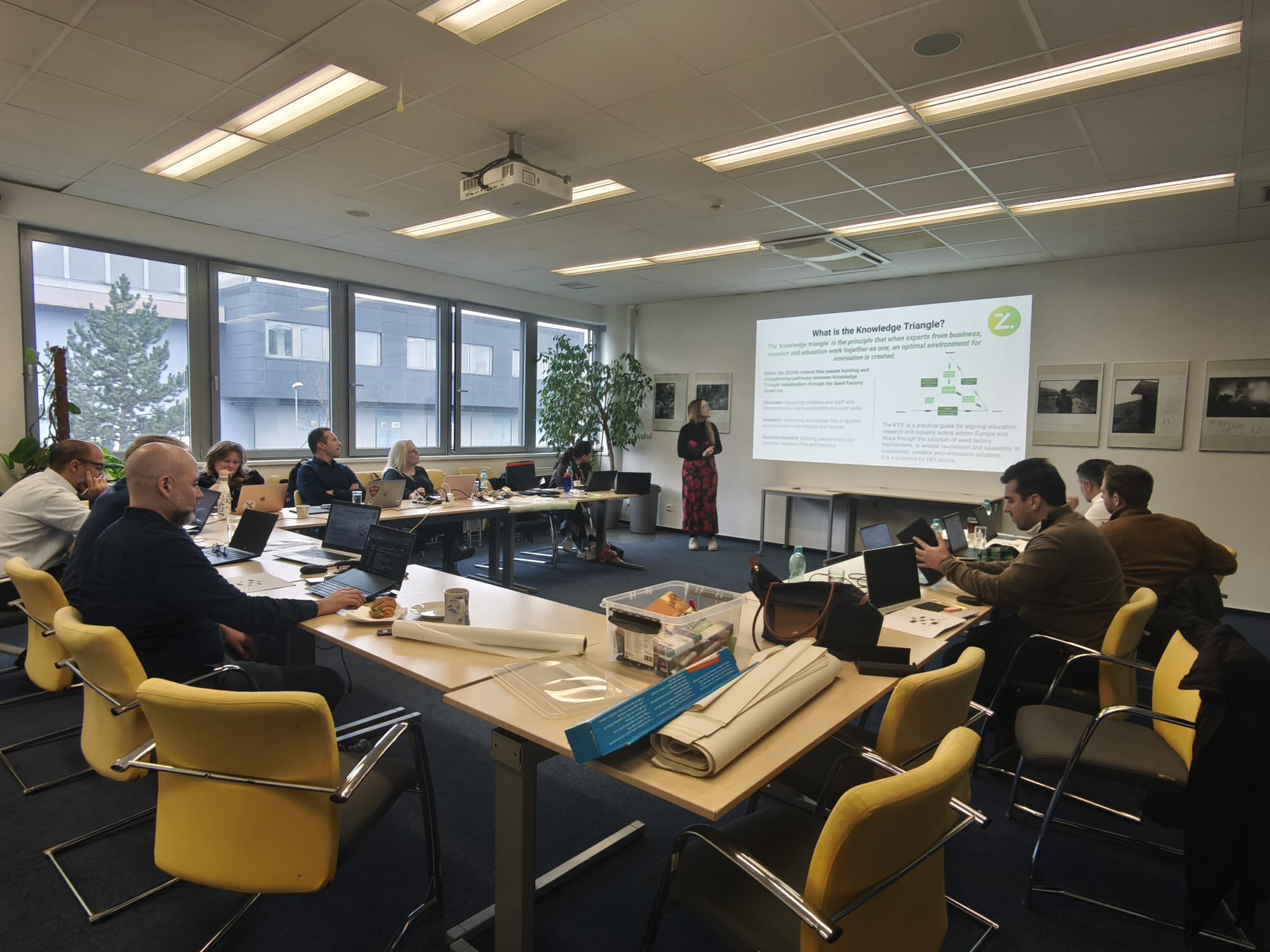
An important milestone of the project was the international partner meeting held in March 2026 in Prague at the University of Economics. The in-person meeting not only helped better align the project’s individual steps but also strengthened trust among partners. Trust is essential for long-term collaboration, which is one of the initiative’s main goals. The meeting also revealed that some activities naturally overlap, increasing the need for coordination and knowledge sharing among partners.
Seed Factory: Where Ideas Grow into Projects
A key outcome of the international collaboration is the concept of the “Seed Factory.” This is a connected network of universities, mentors, and companies that helps develop entrepreneurial ideas and turn them into concrete startups.
The ZEEUS project connects universities not only across Europe but also in Africa, enabling the exchange of experience between very different environments. “In practice, this means, for example, that a student from the Czech Republic can consult their project with an expert from South Africa, or conversely, an international startup can benefit from the know-how of the Czech environment, for instance in the field of industry,” adds Lukáš Válek.
The Seed Factory can be seen as an incubator linking multiple universities. It enables the sharing of knowledge, mentors, and opportunities. This collaboration also involves students, academics, and aspiring entrepreneurs in concrete activities—from education and mentoring to supporting the creation of new startups. At UEP, the xPORT business incubator already supports students in developing their ideas and connecting them with further opportunities within international collaboration.
A Project Evolving with Practice
An interesting insight for project participants is that the initiative is evolving somewhat differently than originally planned. As Lukáš Válek notes: “What we planned a year ago no longer fully applies today.” This shift is seen as natural—it reflects the project’s ability to respond to new insights, partner needs, and ongoing developments, adapting to what proves effective in practice.
From an initial setup in which each partner was responsible for their own part, the project has gradually developed into more intensive collaboration. Individual activities have begun to overlap, complement each other, and build on one another, giving the entire process a new dynamic. It has also become clear that some components naturally intersect, increasing the need for coordination and communication among partners. ZEEUS is therefore not a static project, but a living process that continuously evolves and adapts to entrepreneurial realities and the global context.